Benefits of Copper
Copper doesn't get much attention, but it's one of the essential trace minerals — a nutrient your body needs in small amounts and can't make on its own. In this article, we'll look at the roles copper plays in the body according to nutrition science, which everyday foods naturally contain it, and how copper vessels fit into a centuries-old drinking-water tradition.
What is copper, and why is it considered essential?
Copper is a trace mineral found throughout the body. According to the National Institutes of Health Office of Dietary Supplements, the body uses copper as a component of many enzymes involved in everyday processes, including:
- Energy production
- Iron metabolism and the formation of red blood cells
- Building connective tissue, including collagen
- Normal function of the nervous system
Because the body can't make copper on its own, it comes from your diet. Most people in the U.S. get enough copper from food alone — the recommended dietary allowance for adults is about 900 micrograms per day.
Foods naturally rich in copper
Copper shows up in a wide range of everyday foods, so a varied diet usually covers your needs. Foods that naturally contain copper include:
- Shellfish, such as oysters, lobster, mussels, and clams
- Nuts and seeds, including cashews, almonds, pistachios, and pecans
- Beans and lentils
- Potatoes
- Whole grains and fortified cereals
- Cocoa and dark chocolate
- Dried fruit
- Organ meats, such as beef liver
Can you get too much or too little?
Like any nutrient, balance matters — both too little and too much copper can be a problem, though neither is common in healthy people eating a varied diet. If you have questions about your own copper intake, or you're considering any supplement, talk with your doctor or a registered dietitian. That's a conversation for a professional who knows your health history, not for a blog post.
Copper and drinking water: an old tradition
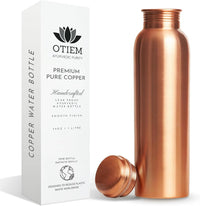
Storing drinking water in copper vessels is a practice that goes back centuries, especially in Ayurvedic tradition, where water rested overnight in a copper pot — known as "tamra jal" — is part of a classic daily routine. People today enjoy copper bottles for the same reasons we do: the heritage, the look, the durability, and the simple ritual of it. At Otiem, we don't make health claims about copper bottles — we just believe a beautiful bottle you love using is the best reminder to drink more water.
The bottom line
Copper is an essential trace mineral with well-documented roles in the body, and a normal, varied diet supplies what most people need. And if the copper tradition speaks to you, you can explore our copper water bottles here.
If you do keep a copper bottle at home, the only upkeep it really needs is a regular clean. The inside darkens through ordinary oxidation, and a couple of minutes with lemon and salt brings it back — we walk through it step by step in how to clean a copper water bottle.
This article is for general informational purposes only and is not medical advice. These statements have not been evaluated by the Food and Drug Administration. Our products are not intended to diagnose, treat, cure, or prevent any disease. Always consult a qualified healthcare provider with questions about your health or diet.
Reference: NIH Office of Dietary Supplements — Copper Fact Sheet