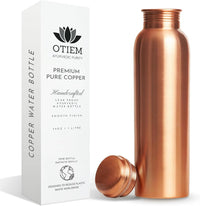
How to Clean a Copper Water Bottle
The 2-Minute Lemon and Salt Method
The short version: lemon juice and salt. It takes about two minutes, it costs nothing, and it works better than almost anything you can buy. Here is the method we use on our own bottles.
- Pour about ½ cup of warm water into the bottle.
- Squeeze in the juice of half a lemon (or two tablespoons of bottled lemon juice).
- Add one tablespoon of ordinary table salt.
- Close the lid tightly.
- Shake vigorously for 30–60 seconds. You will hear the salt scouring the inside.
- Pour the mixture out and rinse thoroughly with clean water — twice, to be sure no acid is left behind.
- Dry the inside and outside with a soft cloth, and leave the bottle open until it is completely dry.
That is it. The inside should come back to a warm pink-orange copper colour. If it does not come all the way back on the first try, repeat it once — and if it is still stubborn, use one of the stronger methods further down this page.
The single most important step is the last one. Rinsing well and drying completely does more to keep a copper bottle looking good than any cleaning product. Water left sitting inside a closed bottle is what causes most tarnish in the first place.
How often should you clean a copper water bottle?
For a bottle in daily use, every two to four weeks is a sensible rhythm. You are not on a schedule — clean it when the inside starts to look dull, brown or patchy rather than by the calendar.
A few habits will stretch that interval a long way:
- Empty it at the end of the day. Do not leave water standing in it overnight or over a weekend.
- Dry it with the lid off. A sealed, damp bottle tarnishes fastest.
- Rinse after every use if you can. Ten seconds under the tap is enough.
- Wipe the outside now and then. The oils on your hands are one of the quickest causes of tarnish on the exterior.
Why the inside of your copper bottle turns dark
Copper is a reactive metal. In a process called oxidation it reacts slowly with moisture, oxygen and even the natural oils on your skin, forming a layer of copper oxide on the surface. This happens to every copper object ever made, and it is completely normal.
That layer is what people call tarnish or patina. It usually shows up as brown or black discolouration, and sometimes as a blue-green film. On a water bottle — which by its nature is wet most of the time — it forms faster than on a copper ornament sitting on a shelf.
On other copper objects this patina is prized: it is why the Statue of Liberty is green, and coppersmiths often force it deliberately for an aged look. On a drinking vessel, though, it is something to clean off. We recommend removing any blue-green deposits before you drink from the bottle again, and cleaning off the brown-black film whenever it bothers you.
Is dark discolouration a sign of a defect?
No — and it is the number one reason bottles get returned. A brand-new copper bottle can arrive with some tarnish inside, because oxidation carries on quietly during storage and shipping. It is not dirt, it is not a used bottle, and it is not a manufacturing fault.
If anything, it is a useful signal: plated or stainless-steel bottles sold as "copper" do not tarnish this way. A bottle that develops a genuine patina is genuine copper. Ours are 100% pure copper, unlined inside and out.
Cleaning the outside of your bottle
For routine care, plain dish soap is all you need:
- Wipe the exterior with a soft sponge or cloth and a little dishwashing soap.
- Rinse with cool water.
- Dry immediately with a soft cloth. Leaving the outside wet is what produces those dark blotchy patterns.
For tarnish on the outside, cut a lemon in half, dip the cut face in coarse salt, and scrub. You will watch the tarnish lift in real time. Rinse with warm soapy water and dry thoroughly. This is the most satisfying two minutes in bottle ownership.
Never put a copper bottle in the dishwasher. The heat, the detergent and the long wet cycle will all tarnish it badly, and can dull the finish permanently.
Stubborn tarnish: stronger methods
If lemon and salt has not done it, work down this list in order. Each one is a little more aggressive than the last, so stop as soon as the tarnish is gone.
White vinegar and salt
- Dissolve 1½ teaspoons of salt in 1 cup of white vinegar.
- Apply with a soft cloth, or decant into a spray bottle for the exterior.
- Leave for about 30 minutes.
- Rinse very thoroughly and dry.
Lemon juice and baking soda
- Mix a few teaspoons of lemon juice with 1–2 tablespoons of baking soda into a paste.
- Apply with a soft cloth and rub gently.
- Rinse with water and polish dry.
Vinegar, salt and flour paste
Good for heavy, even tarnish across the whole bottle.
- Mix 3 tablespoons of flour, 3 tablespoons of salt, and enough white vinegar to make a loose paste.
- Spread it thickly over the copper with a cloth, buffing a little as you go.
- Cover with plastic wrap and leave for a few hours, or overnight.
- Rinse the paste off completely and dry with a soft cloth. Repeat if needed.
Ketchup or Worcestershire sauce
Not a joke — both are mildly acidic and work well on light exterior tarnish. Coat the copper, leave for 20 minutes, rub the tarnish away, then wash with warm soapy water and polish dry.
Lemon juice and cream of tartar
The most aggressive option on this page, and the last one to reach for: cream of tartar can leave fine scratches in the copper. Mix into a spreadable paste, apply for about five minutes, then wash off with soap and water, rinse and dry.
A note on acids. Acid is what lifts tarnish, and it is also what will corrode copper if you leave it in contact for too long. Whichever method you use, rinse the bottle out properly afterwards and dry it. Never store anything acidic in a copper bottle.
What about dents and scratches?
Handcrafted copper is a soft metal, and a dropped bottle will dent. There is no good home repair for a dent in a finished bottle — pushing it back out from the inside is not possible through a narrow neck, and hammering the outside will stretch and mark the copper. Our honest advice is to leave it alone. A dent does not affect how the bottle holds water, and copper wears its history well.
What you should do is clean inside a dent properly, since grime and tarnish collect in the crease. A soft toothbrush with lemon juice and salt will get into it.
Fine surface scratches will blend into the patina over a few months of normal use. Deep scratches on a hammered bottle are essentially invisible — one of the practical reasons we like that finish.
What not to put in a copper bottle
This matters more than the cleaning. Acidic liquids react with unlined copper and can dissolve copper salts into what you are drinking. Keep to water only.
- No juice, lemon water, milk, wine, vinegar, tomato juice or fizzy drinks.
- No tea, coffee or anything hot — heat accelerates the reaction, and hot liquid in an uninsulated copper bottle is unpleasant to hold anyway.
- No oils or infusions.
- Just water. That is what these bottles are built for.
The same rule applies to any unlined copper vessel — pots, cups, jugs. It is the reason traditional copper cookware is tin- or steel-lined.
Store-bought copper cleaners
Commercial copper creams and pastes work well and will not scratch the metal. Two cautions: they are considerably more expensive than a lemon, and many are formulated for decorative copper rather than drinkware. Read the label, confirm the product is safe for items that contact food and drink, and rinse exhaustively afterwards. For the inside of a water bottle, we would stick with lemon and salt.
Just bought your first copper bottle?
Welcome — and thank you. Three things worth knowing on day one:
- Some tarnish is normal, including on arrival. See the section above. Give it a lemon-and-salt clean and it will look brand new.
- It will change colour over time. That is copper doing what copper does, not the bottle wearing out.
- Empty and dry it at the end of the day. This one habit prevents most of the cleaning you would otherwise have to do.
A copper bottle asks for a little more than a plastic one, in the same way a cast-iron pan or a good leather bag does. A few minutes a month is the whole of it — and it is a bottle you will still be using in ten years.
If you are still deciding, you can see the full range in our shop, read about the Ayurvedic tradition behind copper vessels, or go straight to our classic pure copper water bottle.
This article is for general informational purposes only and is not medical advice. These statements have not been evaluated by the Food and Drug Administration. Our products are not intended to diagnose, treat, cure, or prevent any disease.